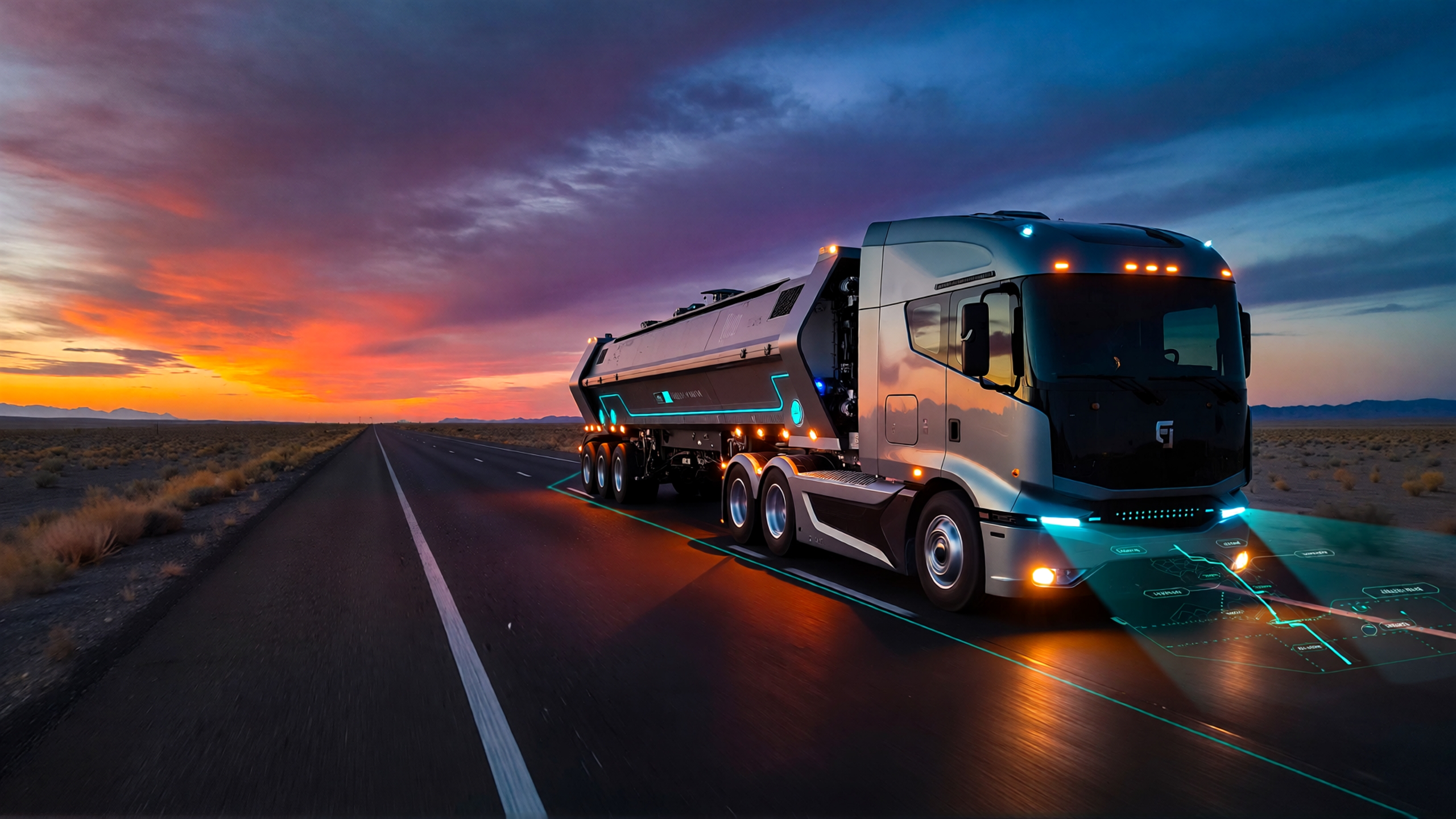
From Science Fiction to Reality
Autonomous vehicles and self-driving trucks are no longer a thing of the future. In 2026, this technology is entering a critical transition phase, particularly in the United States and China, where commercial services are now operating at scale.
Today, Waymo's Robotaxi service operates in 5 major U.S. cities, while Aurora Innovation has begun driverless freight deliveries in Texas, covering over 1,200 miles without a human driver.
Key Numbers to Watch
- The autonomous vehicle market is projected to reach $626.9 billion in 2026
- By 2035, autonomous trucks could account for 30% of new truck sales in the U.S.
- The Robotaxi industry is expected to grow from $1.95 billion in 2024 to $188.91 billion by 2034
- Autonomous vehicles can improve fuel efficiency by 13-32% per loaded mile
Why This Matters
1. The Truck Driver Shortage Crisis
The global truck driver shortage has exceeded 3.6 million unfilled positions, with an estimated 3.4 million drivers expected to retire by 2029. Autonomous trucks are emerging as a key solution that many countries are actively developing.
2. Superior Efficiency
Autonomous trucks can operate 24/7 without rest breaks, have no hours-of-service limitations, and feature 360-degree vision systems that never tire or lose focus. This enables them to transport goods nearly twice as far as human drivers.
3. Improved Safety
According to Waymo's statistics, their autonomous vehicles experience 90% fewer serious injury crashes compared to human-driven vehicles. This data challenges the traditional belief that human drivers are safer than machines.
The Hub-to-Hub Model: A Practical First Step
One popular operational model is Hub-to-Hub Operation. Autonomous trucks handle highway routes between distribution centers, while human drivers manage the first and last mile deliveries.
This model reduces implementation complexity since highways offer more predictable environments compared to urban streets.
Challenges Ahead
Regulatory Uncertainty
Different U.S. states have varying regulations. California still requires a human safety operator in vehicles, while other states are more permissive. Recent legislative proposals including the AMERICA DRIVES Act and SELF DRIVE Act 2026 aim to establish national standards.
Labor Impact
While the technology helps address driver shortages, concerns about job displacement remain. Labor unions like the Teamsters continue to push for legislation requiring human operators in vehicles.
Infrastructure Requirements
Autonomous vehicles depend on 5G connectivity and V2X (Vehicle-to-Everything) technology. By 2034, over 90% of the market is expected to support 5G-based C-V2X technology.
Business Implications
While this technology hasn't yet reached widespread adoption in many regions, businesses should start preparing now:
- Logistics Companies: Monitor developments and assess how the technology will impact costs and competition
- Automotive Parts Manufacturers: The automotive industry will need to adapt to sensors, LiDAR, and AI systems
- Insurance Providers: Risk models will fundamentally change when humans are no longer behind the wheel
- Software Developers: Opportunities exist in developing autonomous driving-related systems
Conclusion
Autonomous vehicles won't replace humans overnight. The transformation is happening gradually. Businesses that understand and prepare for this change will have a long-term competitive advantage.
What's certain is that this technology will permanently reshape the transportation and logistics industry.